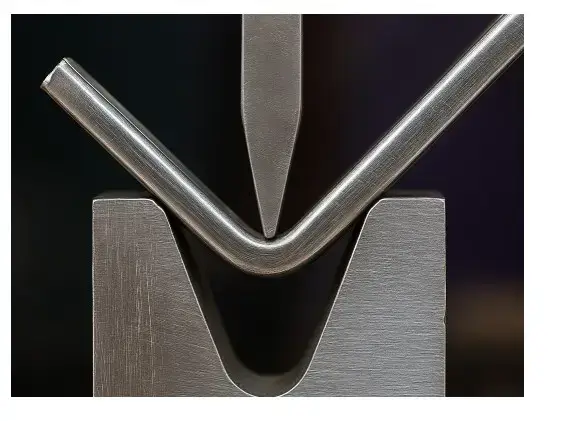
When bending metal, it is important to maintain its strength and shape. The effect of deformation on metal properties can be critical: cracks appear, stress resistance decreases, and the appearance of the product deteriorates. To avoid these problems, you need to understand the physics of the process and follow the technology.
What is plastic deformation of metals?
Plastic deformation is an irreversible change in the shape of a metal under load. Unlike elastic deformation (when the material returns to its original state), plastic deformation leads to residual distortions. This happens when the stress exceeds the yield strength of the metal.
How to prepare the metal for bending?
Proper preparation reduces the risk of defects. Here are the key milestones:
-
Surface cleaning – removing dirt, oil and scale.
-
Heating (if required) – for some alloys, for example, stainless steel.
-
Marking is the exact designation of the fold lines.
If you need an accurate billet, laser pipe cutting in Minsk will help. https://namas-m.by/proizvodstvo/rezka . This minimizes errors before flexing.
Sheet Metal Bending Tool
The choice of equipment depends on the thickness and type of metal.:
-
Manual sheet bending machines are used for thin sheets.
-
Hydraulic presses are used for thick workpieces.
-
Roller machines – for arc bending.
For complex work, it is better to use professional services, for example, bending sheet metal on specialized equipment.
How to bend metal correctly?
-
Choose the right bending radius – bending too sharply causes cracks.
-
Consider the direction of the rolling – bending across the fibers increases the risk of rupture.
-
Control the force – overloading leads to irreversible deformation.
What should be considered when bending sheet metal?
First of all, it is necessary to take into account the thickness of the metal. The thicker the sheet, the greater the force required to deform it, and the risk of cracks or unwanted bends increases, especially when working with a small bending radius.
The type of alloy and its ductility are equally important. Different metals react differently to deformation. For example, aluminum alloys are easier to bend but more prone to microcracking, whereas steel requires more effort but provides a more stable shape with the right technology.
It is also necessary to take into account the temperature conditions.