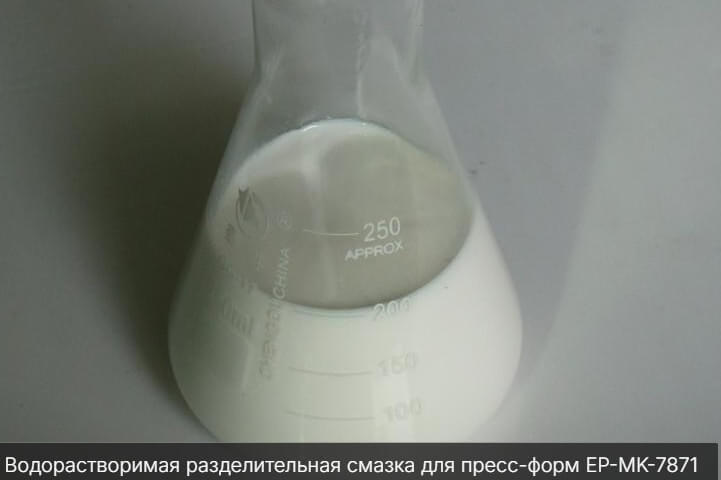
Every manufacturer engaged in the field of plastic injection molding knows how expensive a marriage is. Damaged products are not only direct losses from loss of material and processing costs, but also loss of time, equipment downtime and the risk of damage to expensive tooling. Many mistakenly believe that the main causes of the defect lie in a malfunction of the machine or errors in the settings of the casting parameters. However, often the root of the problem lies on the surface — literally on the surface of the form. We are talking about the quality of its separation, which is ensured by the correct anti-adhesive lubricant for molds.
Why is the product not coming out of shape: the hidden sticking problem
The ideal casting cycle looks like this: the melt is fed into the mold, cooled, the mold opens, and the finished product is easily removed. But in practice, there is a strong adhesive interaction between the surface of the mold and the plastic. The melt penetrates into the microscopic pores of the metal, and when the product cools, a mechanical bond is formed.
This results in various types of marriage.:
-
Bullying and damage: the most frequent and destructive type. The product adheres to the core or wall of the mold, and when pushed out by the pushers, it deforms, tears, or gets mechanical damage.
-
Non-filling of the mold: strong sticking in one area may cause the mold to fail to open properly or the product to jam when removed. This disrupts cycle synchronization and can lead to underflows on subsequent casting cycles.
-
The appearance of ejector marks: when the product sticks, the pushers need more force to push it out. This leads to the appearance of unaesthetic indented marks or even to the penetration of thin-walled parts.
-
Accumulation of carbon deposits: plastic residues that do not detach from the mold accumulate over time, sinter and form carbon deposits. This carbon deposits spoil the surface of subsequent products and require frequent production stops to clean the tooling.
All these problems lead to one thing — a decrease in the profitability of production. It is here that a character who is often underestimated enters the scene: the dividing line.
Separation compounds
Release agents, often called release agents, are specialized formulations that create the thinnest barrier layer between the mold surface and the molten plastic. A properly selected anti-adhesive mold lubricant performs three critical functions:
1. Ensuring perfect separation. The main task is to ensure that