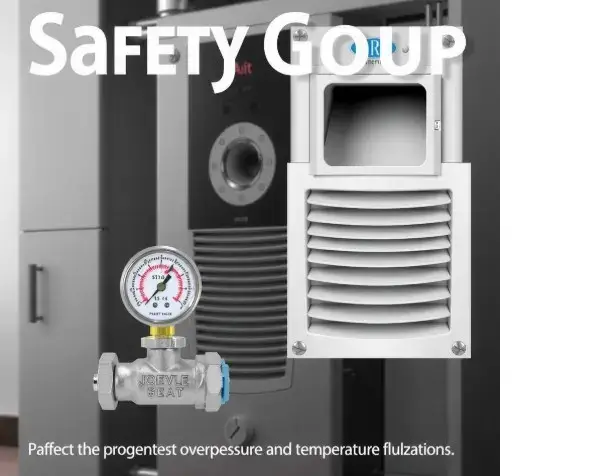
Safety groups for heating play a critical role in ensuring the efficiency and safety of heating systems. They are a set of devices designed to protect these systems from overpressure, temperature fluctuations and other potential emergencies. This is an extremely important piece of equipment that must carefully regulate and control the various parameters of the heating system in order to prevent possible problems and accidents.
Composition and role of security teams
Security Group https://market.santehgaz.com/katalog/predokhranitelnaya_i_reguliruyushchaya_armatura/gruppy_bezopasnosti The heating system includes several key components, each of which performs a specific function. The main elements include a safety valve, a pressure gauge and an air vent. The safety valve is responsible for relieving excess pressure, which avoids explosions and damage to the system. The pressure gauge is used to monitor the current pressure in the system, enabling timely response to its changes. The vent, in turn, helps to remove the air accumulated in the system, which helps maintain its optimal performance.
The main role of these components is to maintain the safe operation of the heating system. Each of them acts as an irreversible fuse, providing reliable protection against critical changes in system parameters. For example, when the pressure rises above the established norm, the safety valve automatically opens and releases part of the coolant into the atmosphere or reservoir, thereby reducing the pressure to a safe level. This prevents possible ruptures and leaks that can harm not only the system, but also the people in the room.
Advantages of using safety groups in the heating system
The use of safety groups in heating systems brings many advantages. Firstly, it also guarantees the protection of not only the system itself, but also the property located in the facilities it serves. By preventing emergencies, safety teams reduce the risk of damage, which can lead to significant repair and restoration costs. Without proper protection, even a small pressure change can cause significant damage.
In addition, safety groups enhance the overall durability of the equipment. Maintaining stable operating conditions avoids wear and tear on key components of the heating system. In addition, timely discharge of excess pressure helps to extend the service life of pipes and