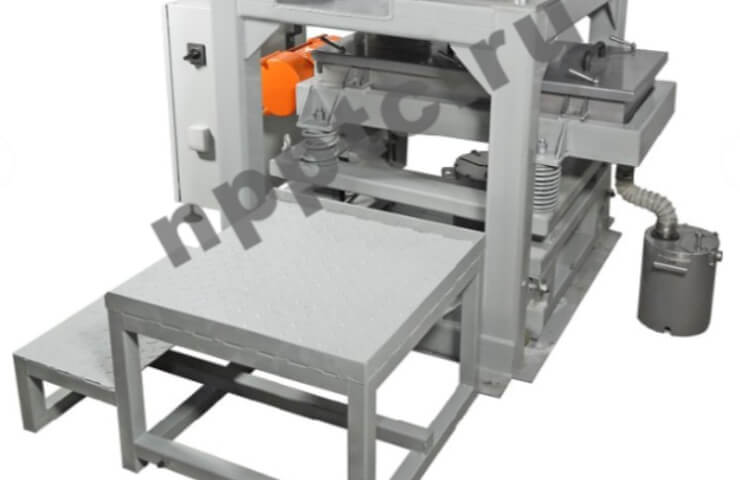
The quality and grade of the steel produced directly depend on the accuracy of the introduction of alloying additives — ferroalloys. An error in their chemical composition or an inaccuracy in dosage leads to a serious technological defect, violating strict standards for finished products. The key to ensuring this control is laboratory analysis. However, even the most modern spectrometer or chemist faces a fundamental question: how to prepare a representative sample from a large, exceptionally hard and often brittle piece of ferrochrome, ferrovanadium or ferromolybdenum? The first and critically important stage, on which the reliability of all subsequent data depends, is the primary fragmentation.
A challenge for the metallurgical laboratory
Ferroalloys — ferrochrome, ferrovanadium, ferromolybdenum — are hard and abrasive alloys supplied in large pieces. The laboratory's task is to prepare a sample from them for accurate analysis. The goal is to obtain a homogeneous material for two key methods. Firstly, for rapid analysis on a spectrometer, which requires a fine and pure fraction. Secondly, for chemical analysis, where the sample must reliably reflect the composition of the entire batch. Therefore, the equipment should not just grind, but carefully split the material, avoiding excessive heat or mechanical stress that can distort the true chemical composition.
The principle of operation and advantages of jaw crushing for ferroalloys
The jaw crusher is optimally suited to solve this technological problem. Her work is based on the principle of crushing, not impact abrasion. The powerful compression of the material between two crushing cheek plates leads to its splitting along natural cracks and lines of least resistance. This method has key advantages for working with ferroalloys. The main one is the so—called "cold" crushing. Unlike impact or vibration mills, where the impact energy is actively converted into heat, the process in the jaw chamber minimizes sample heating. This eliminates the risk of surface oxidation or phase transformations in the alloy, which could render the analysis results irrelevant.
The second significant advantage is the precise control of the granulometric composition of the product. By adjusting the width of the output slot, the operator can set the required particle size. The task is not to get "dust", but to create fragments of a given fraction, for example, from 3 to 5 millimeters. This fraction is ideal for subsequent sample reduction and sampling of the middle part, and also ensures the correct operation of the spectrometer. In addition, the simple and powerful design of the jaw crusher ensures high