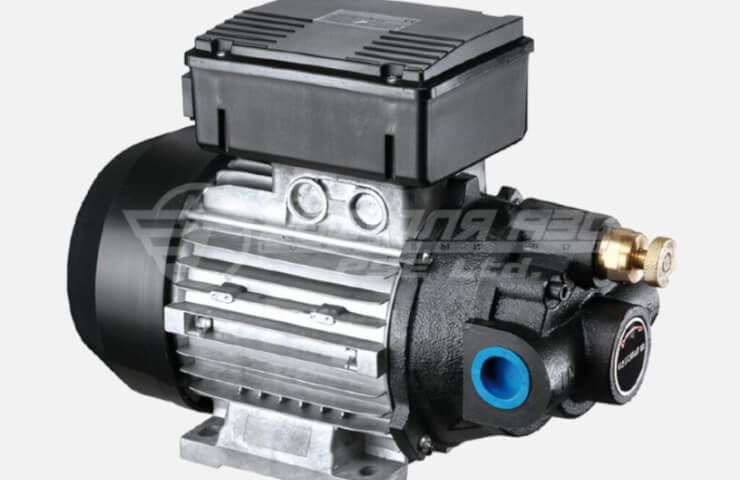
Hydraulic stations, gearboxes of rolling equipment, conveyors and presses require regular oil replacement and refilling. Maintenance regulations are counted in hundreds of operating hours, and each delay directly affects the availability of equipment. At the same time, the volumes are large: it takes hours to pour cans from barrels, and inevitably with spills.
What does the workshop lose with manual overflow
- Service time. It takes more than an hour to pour 200 liters in cans; 5-10 minutes is enough with a pump.
- The work of mechanics. Specialists are busy carrying canisters instead of setting up and diagnosing.
- Petroleum products. Losses during manual work are written off as inevitable, but on a workshop scale it is tens of liters per month.
- The purity of hydraulic fluids. Overflow from open containers introduces dust and debris into the system, which accelerates hydraulic wear.
- Flow control. Oil is written off "by sight", and it is more difficult to plan purchases.
What kind of equipment is used
For petroleum products, manual pumps (for small volumes and viscous grades), electric installations for pumping from barrels and mobile stations on trolleys that serve several pieces of equipment are used. There are also barrel kits: the unit is mounted directly on a 200-liter barrel, and an intermediate container is not needed. Pumps for pumping oil are selected for viscosity, temperature and required flow rate. The effect is especially noticeable in winter, when the oil thickens and manual pumping becomes a separate problem.
How to choose an installation
- Viscosity of the working fluid: the thicker the grade, the more powerful the unit is needed.
- Capacity: from 10-15 to 50-70 l/min.
- Power supply: 220 V in the workshop, 24 V for mobile posts.
- Capacity type: 200 L barrel, tank or hydraulic tank.
- The length of the hose and the transfer gun: the more convenient the feeding point, the less time the operation takes.
Oil accounting: why meters are needed
Flow meters show how much actually went into each unit. According to these figures, lubricants are written off not "by sight", but in fact — it is easier to plan purchases, see overspending and find leaks on time.
Result
Mechanization of pumping reduces maintenance time of hydraulic systems and gearboxes, reduces losses and contamination of working fluids. Equipment costs are usually recouped in a few months — on saved oil products and hours of downtime. For enterprises with a continuous cycle, this is also a way to keep maintenance regulations without delays. And you can start with one installation — on the most problematic site.