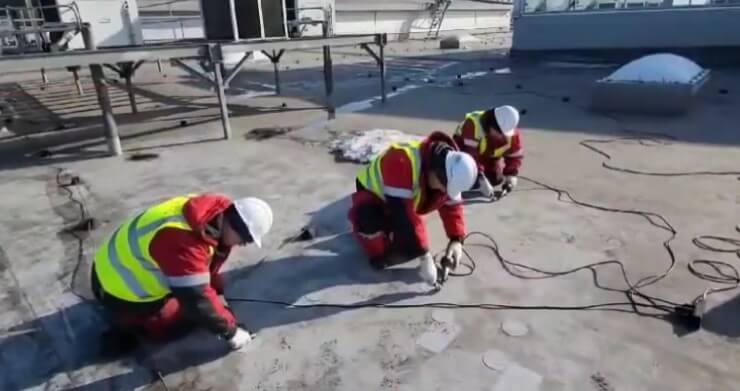
Hi, my name is Vladimir, and I have been working as a roofing specialist at Ankons for over ten years. During this time, I've seen a lot of roofs, from simple garages to huge industrial buildings. Today I want to talk about restoring the protective layer on flat roofs. This is an important topic because a flat roof, or, as it is also called, an operational roof, is often exposed to weather conditions, ultraviolet radiation and mechanical stress. The protective layer plays a key role here: it protects waterproofing materials from damage, helps in water drainage, and can even serve as additional thermal insulation.
Imagine a typical flat roof: it usually has a layer of waterproofing underneath, often based on bitumen polymer membranes or rolled materials. There is a protective layer on top that can wear out over time. If it is not restored, the waterproofing will begin to collapse, leaks will appear, and the entire structure will fail. In my practice, I often encounter cases where building owners ignore minor defects and then have to make major repairs. Let's look at two popular restoration methods: gravel filling and paving. I will describe them step by step, based on real-world experience.
Gravel filling as a recovery method
Gravel filling is a classic approach for flat roofs. Fractionated gravel is used here, usually with a grain size of 5 to 20 millimeters, which is poured in a layer 5-10 centimeters thick. This material performs several functions: protects against UV radiation, evenly distributes the load and improves drainage. In roofing terms, this is called a ballast layer, which stabilizes the entire system.
The restoration process begins with an inspection of the existing roof. I always recommend cleaning the surface of old debris, dust and damaged elements. If the waterproofing is intact, then an additional layer of primer is applied to it for better adhesion. Then the gravel is evenly distributed. It is important to use washed gravel without clay impurities to avoid blockages in the drains. At Ankons, we prefer gravel with rounded fractions so that it does not damage the membrane under weight.
The advantages of this method are obvious: low cost, easy installation and good protection against overheating in the summer. Gravel reflects the sun's rays, reducing the temperature of the roof by 10-15 degrees. However, there are nuances – such a layer is not suitable for operational roofs where people walk, because gravel can shift. In one of the projects, we were restoring the roof of a warehouse: after filling in, the leaks stopped, and the client