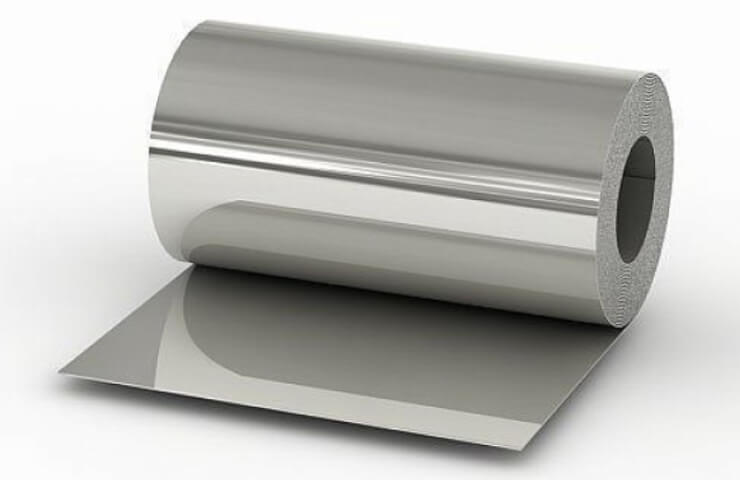
A metal sheet for a roof is chosen not only by price, but first of all they look at the composition, thickness, type of coating and the conditions in which the roof will be used. One material is suitable for a country house canopy, the other is suitable for an apartment building where protection from precipitation and temperature changes is needed. Let's figure out which sheets are used for roofing and how to choose the material for a specific object.
Which sheets are bought for roofing
Four types of sheet metal are most often used in roofing, each with its own characteristics in strength, processing and appearance.:
-
Hot rolled sheets
They are produced at high temperatures, which makes them thicker and less smooth. They are rarely used for roofing, more often in rough constructions or temporary coverings.
-
Cold-rolled sheets
Denser in structure, with a flat surface and stable thickness. They are used as a base for galvanizing or polymer coating. Without a protective layer, they rust quickly.
-
Galvanized sheets
One of the most common options for roofing. The zinc coating protects against corrosion while remaining affordable. They are often used in outbuildings, warehouses, garages.
-
Profiled sheets (corrugated sheet)
These are galvanized sheets rolled in an undulating or trapezoidal profile. The increased rigidity allows you to cover large spans without installing supports too often. They are most often used in the construction of private houses, especially with polymer coating.
Main technical characteristics
The main indicator that determines the strength of the roof, resistance to dents and noise during rain is thickness. For the roof of private houses, sheets with a thickness of 0.7 to 1 mm are usually ordered. Thin sheets (0.35–0.4 mm) are suitable only for temporary buildings or canopies. Thick metal, for example, metal sheets of 2 mm and higher, are installed at industrial facilities — they can withstand heavy wind and snow loads.
Type of coverage
The metal itself is susceptible to corrosion, so choose sheets with a protective layer.:
-
Galvanizing is the most basic option, the service life depends on the thickness of the zinc.;
-
Aluminum zinc — withstands aggressive environment better than conventional galvanizing;
-
Polymer coating (polyester, plastisol, Pural) — adds aesthetics and additionally protects against moisture and UV radiation.
Rigidity
Profiled sheets provide additional