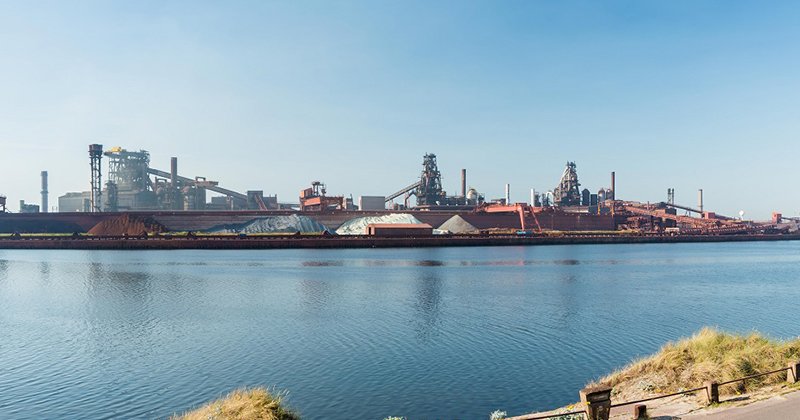
Currently, ArcelorMittal France's production facilities are used by 60-70%, which is about 6.5-6.8 million tons out of a total production capacity of 10 million tons per year, due to the constant decline in steel consumption in Europe and France. That's what the head of ArcelorMittal France, Alain Le Grix de la Salle, told the Senate Economic Affairs Committee in Paris last week during a televised hearing seen by[b]Callanish.[/b].
The steel mill's high energy costs are jeopardizing the planned Dunkirk Direct Reduction Plant (DRP) model, which will produce DRI to power future electric arc furnaces. Taking into account the current CO2 emission standards paid by ArcelorMittal, the cost of a steel roll made in a blast furnace is equivalent to the cost of a roll made using a gas-fired DRP process.
"Thus, there is currently no economic model. this justifies the transition to the DRP model," De la Salle said. The hydrogen produced by electrolysis is 70% dependent on the price of electricity. The target price for hydrogen, which will allow the production of pre-recovered iron ore at a competitive price, is 2 euros/kg (2.2 US dollars), while the current market price is about 7 euros/kg.
"To achieve such a target price, the price of electricity would have to be 25 euros per kilowatt hour. This gives you an idea of what to do next. … In any case, it will take time to implement DRP in Europe; its development will depend on the cost of natural gas and electricity. This does not mean that our Dunkirk project has been stopped: it has been suspended," de la Salle said.
In his speech, he highlighted the ongoing deindustrialization taking place in France (see separate material). Determining the price of energy resources that would promote reindustrialization in the country is a serious problem.
"I'll give you an example with hydrogen: the Americans and the Chinese are preparing to overtake Europe. Can't we create a demo on a European scale without wasting time, as we are doing now? Let's solve the economic problem of price in order to demonstrate the industrial feasibility of hydrogen-related projects. Time passes, but nothing is being done," he warned.
Europe should authorize certain assistance measures for energy-intensive industries. "I mean tax breaks and compensation for the cost of CO2 emissions in the price of electricity – this is called carbon emissions compensation. These two forms of assistance are necessary for us to remain competitive," he continued