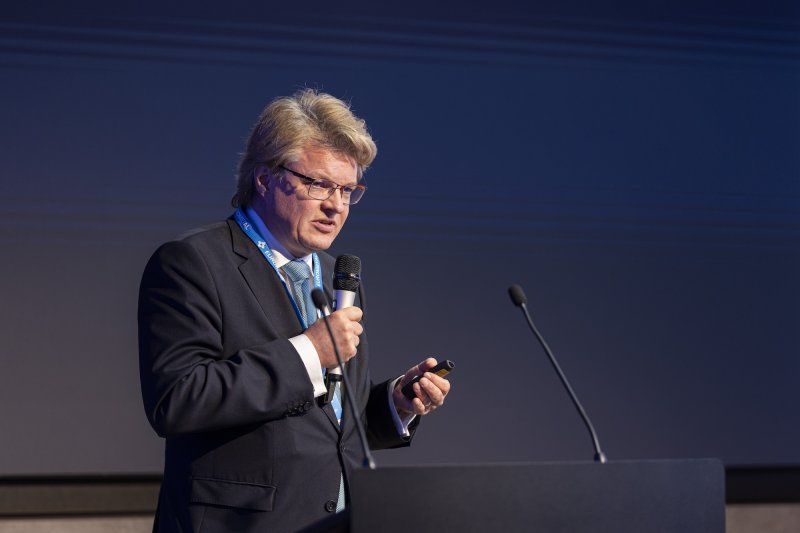
European steel producers are campaigning for an early and more active replacement of the European protection system, Axel Eggert, CEO of the Eurofer industrial group, confirmed at a conference organized by the EUROMETAL steel manufacturers association.
Eurofer is putting pressure on the European Commission to strengthen safeguards in the steel trade in an effort to maintain a strong presence in Brussels, while European authorities are consulting on ways to replace the steel safeguards system.
Speaking at a conference dedicated to the 75th anniversary of EUROMETAL in Luxembourg, Eggert spoke about Eurofer's desired protection policy: increasing tariff quotas (TRQ). protection of European producers with unanimous jurisdiction over measures taken in all exporting countries. Therefore, replacement measures should be applied to all categories of steel, including distribution to processed or derivative products.
Eggert said that despite the recent revision of protective measures, Asian exporters were able to cope with the current duty rate of 25% above quotas and remain competitive compared to other countries. European domestic production. This is compounded by the latest tariff offensive by the United States, which has doubled its steel duties to 50%, which threatens to simultaneously divert imports to Europe from the American market and limit Europe's own export potential.
While the EU continues negotiations with the United States to reduce these tariffs to zero, Eggert said, by the July 9 deadline, the pair is still "very far from concluding a deal," and he expects that, given the latest U.
S. proposal, the tariff rate of 25% will be maintained. for export from Europe.
To mitigate this pressure, Eurofer is requesting an extension of the doubling of the tariff rate to 50% in order to reduce the overall import penetration into the European market by the same 50%. Eggert admitted that while politicians are increasingly receptive to the idea of increasing restrictions, European public services are an obstacle, overwhelming senior lawmakers with purely technical arguments that delay progress – a view echoed by Eurofer President Dr. Henrik Adam in his presentation.
The EU protective measures, initially introduced to eliminate deviations from the original Section 232 steel tariffs imposed by US President Trump, which expire in July 2026, and according to the rules of the World Trade Organization (WTO), they must be terminated after eight years. Obviously, the protective measures did not lead to an improvement in the trade balance as the deadline approached, since the share of imports


