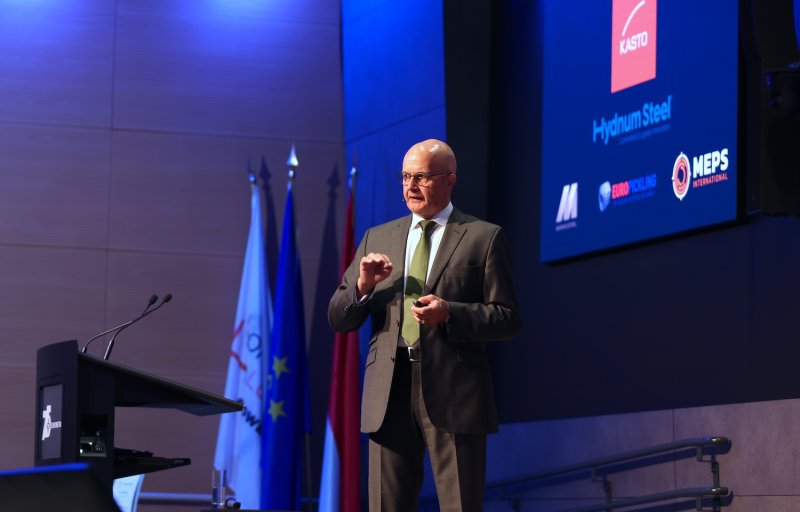
The current state of the European steel industry, as well as the entire value chain it supports, is characterized by growing challenges and uncertainty. Speaking at a conference dedicated to the 75th anniversary of EUROMETAL, Henrik Adam, CEO of Tata Steel Europe, stressed that deindustrialization is not a long-term risk, it is already in full swing. And the question is whether the European community wants this to continue and Europe to become dependent on it.
According to Adam, Europe's industrial sector is the only one in the world where there is a steady downward trend. While other regions are expanding their civil and processing industries, Europe is experiencing factory closures and job cuts. "There have already been job losses, new ones are being announced, and facilities are being closed," he warned.
European steel mills operate under one of the strictest air emissions regulations in the world. While the average global carbon intensity is about two tons of CO2 per ton of steel, many European plants perform significantly better. However, there is a price to pay for this, Metal Expert understands.
Europe's desire for decarbonization does not meet international standards, which puts EU producers at a disadvantage compared to imports from countries with lower environmental requirements and production costs.
"We already know about projects that are being developed up to and including circumvention of EU rules," Adam said.
New low-carbon technologies are under development, but scaling from the laboratory to the industrial level will take time and require significant investments. Without a reliable export management system and emissions related to product processing, European factories will lose competitiveness after the full implementation of CBAM in 2026.
Energy costs remain one of the most serious burdens for European producers. According to Adam, industrial electricity in Europe is on average 150% more expensive than in other regions, and industrial gas prices are more than twice as high.
European manufacturers switching to EAF technology are particularly at risk. He argued that Europe should create a long-term and low-cost energy system or shift the production of energy-intensive goods to regions of Europe where renewable energy sources are cheaper. He named southern countries such as Spain, Portugal and Greece as potential energy centers.
Scrap metal is an important raw material for low-emission steel production, but its availability in Europe is under increasing threat. Currently, the EU annually