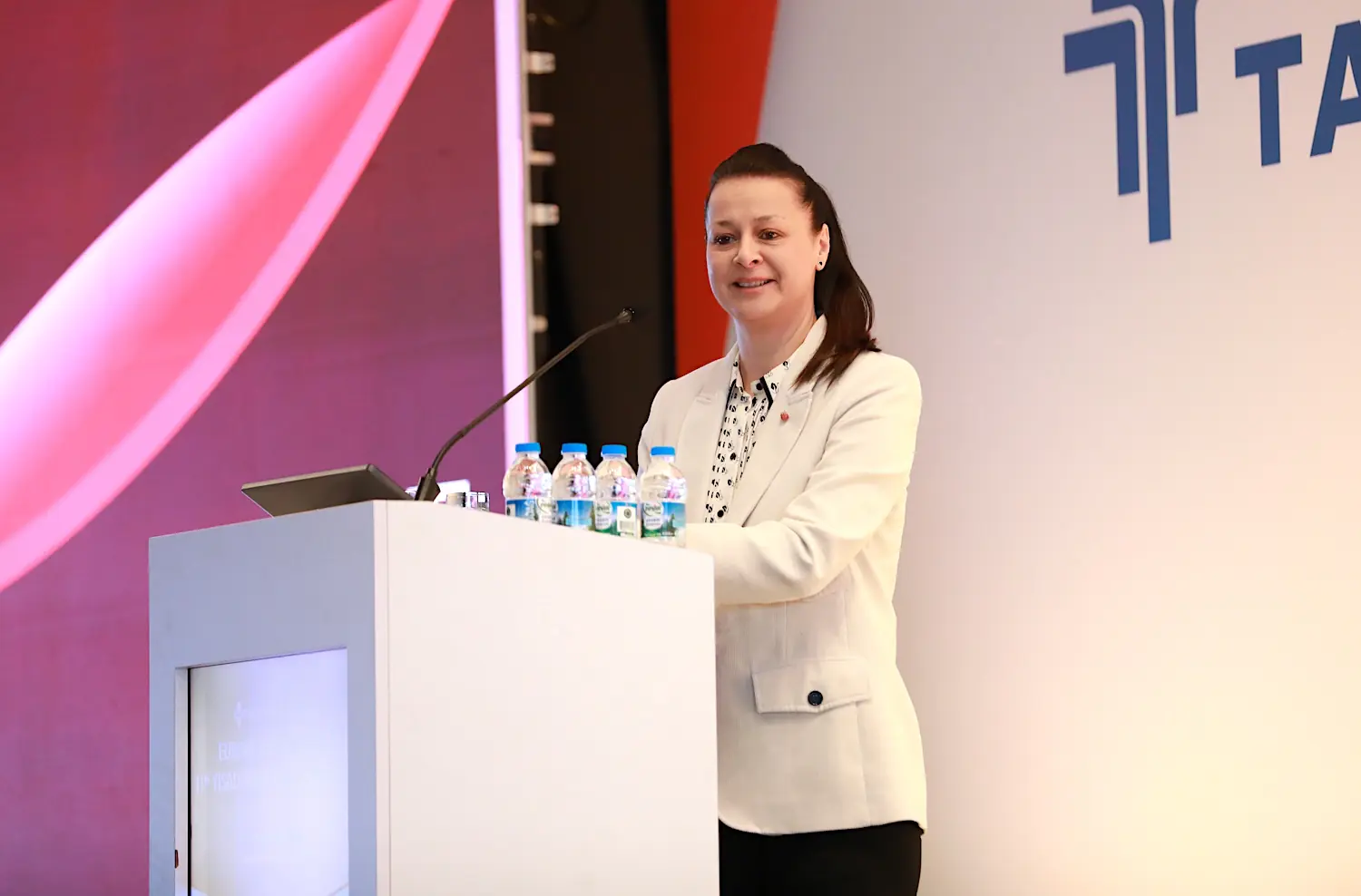
Speaking at the EUROMETAL Steel Day and YISAD Flat Steel Conference, organized in collaboration with SteelOrbis at the Istanbul Marriott Hotel Asia on Tuesday, March 24, Anil Akalin, President of the Environmental Markets of Turkey and the Persian Gulf countries at the British consulting company Redshaw Advisors, said that carbon dioxide emissions in the EU Border Control Mechanism (CBAM It will significantly increase costs and change trade flows for exporters focused on the European market.
Akalin noted that the final phase of CBAM began on January 1, 2026, which marked the transition to full financial implementation of the mechanism.
Gradual implementation until 2034
According to Akalın, CBAM certificates will become available during 2026, while the deadline for issuing the first certificate is set for September 30, 2027.
This mechanism will be gradually put into effect until 2034, when 100% of the built-in emissions will be covered, in parallel with the complete elimination of free quotas under the EU emissions trading system. Failure to comply with CBAM requirements will result in penalties of 100 euros per ton, while failure to obtain declarant status may result in fines of up to 500 euros per ton.
The scope of application will expand by sectors
The scope of CBAM is expected to expand over time. By 2028, it is expected to include industries such as household appliances, automotive, metallurgy, and mechanical engineering, with industries such as plastics and chemicals likely to follow at later stages. Akalin stressed that this mechanism will become more comprehensive, and all costs will eventually fall on the shoulders of manufacturers.
Carbon prices are expected to rise in the long term.
Akalin stressed that the prices for CBAM certificates are not directly equal to the prices for ETS benefits in the EU, but are based on similar market mechanisms. Carbon prices in the EU have shown significant volatility over the past decade, and the current lower levels should not be interpreted as a long-term trend.
Analysts expect carbon prices to rise over time, potentially reaching 200 euros as the market approaches the 2030s. By 2050, reduced emissions quota supply is expected to maintain persistently high carbon prices.
Significant impact on the value of Turkish exports
According to the estimates announced during the presentation, by 2026, Turkish steel exports to the EU may be accompanied by additional costs, which will amount to about 11% of the cost of production.
According to forecasts, Turkey's total expenses related to CBAM will reach 771 million