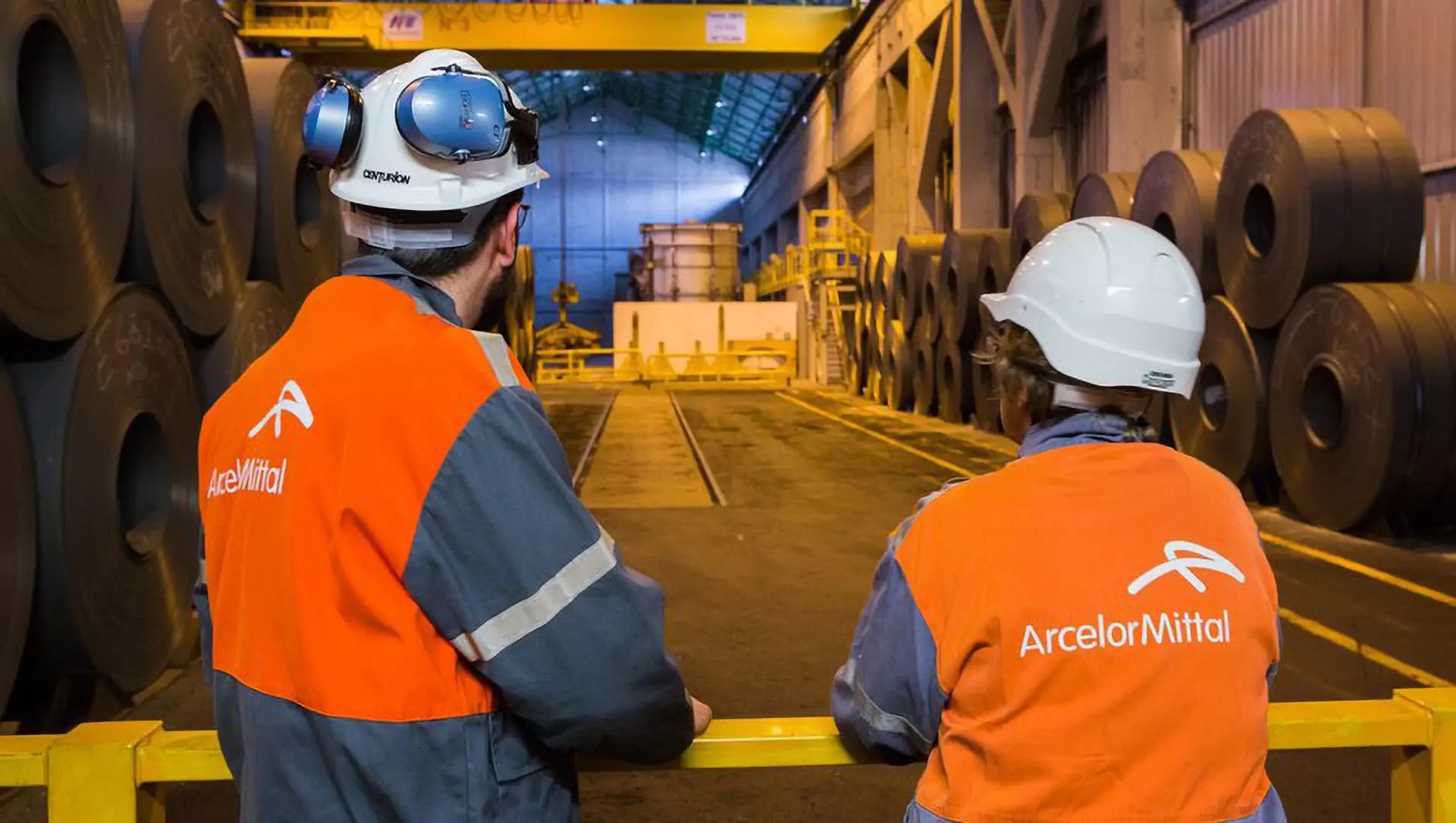
ArcelorMittal and its partners — Mitsubishi Heavy Industries Ltd., BHP and Mitsubishi Development Pty Ltd. — have completed the first phase of trials of carbon capture technology at the company’s integrated steelworks in Ghent, Belgium. The results will help assess the prospects for deploying the technology at industrial scale, the companies said in a joint statement on October 28.
The trials are important for the entire steel industry: blast furnace production accounts for about 70% of global steel output and is expected to play a significant role for several more decades. The Ghent plant has two blast furnaces with a combined capacity of about 5 million metric tons of crude steel per year.
According to the companies, the pilot trials captured more than 90% of CO₂. Specialists also collected operational and engineering data to help assess the feasibility of applying the technology at full scale to a blast furnace in Ghent.
Engineering calculations based on the trial results show that deploying the technology to capture CO₂ from the off-gas stream before combustion could reduce the plant’s overall carbon intensity in Ghent by 24%, the companies said. Applying the technology at several emissions points in steelmaking could bring the facility closer to near-zero carbon intensity.
“The trial results are very encouraging and demonstrate the potential of blast furnace and integrated steelmaking to reduce emissions,” said Ben Ellis, BHP’s vice president of marketing and sustainability. “Through this partnership, we have tested a way to achieve significant emissions reductions in the near term, and over time it could become one of the tools for near-zero-carbon steelmaking in blast furnaces.”
In the first phase, only CO₂ was separated. The remaining carbon monoxide, the companies noted, could potentially continue to be used at the plant to generate electricity and heat, although its subsequent combustion produces additional CO₂.
The partners will now move on to the second phase: the capture process will be applied to gases from fuel combustion in the furnace used to reheat billets at the hot-rolling mill in Ghent. The furnace uses a changing mix of coke oven, blast furnace and basic oxygen furnace gases, as well as natural gas. As a result, the flue gas composition is more variable than that of the stream studied in the first phase.
According to Platts, a division of S&P Global Energy, the carbon-inclusive price of hot-rolled coil in Northwest Europe was €810 per metric ton ex-works Ruhr on October 27. The price rose by €5 per ton on the day.
By Annalisa Villa


