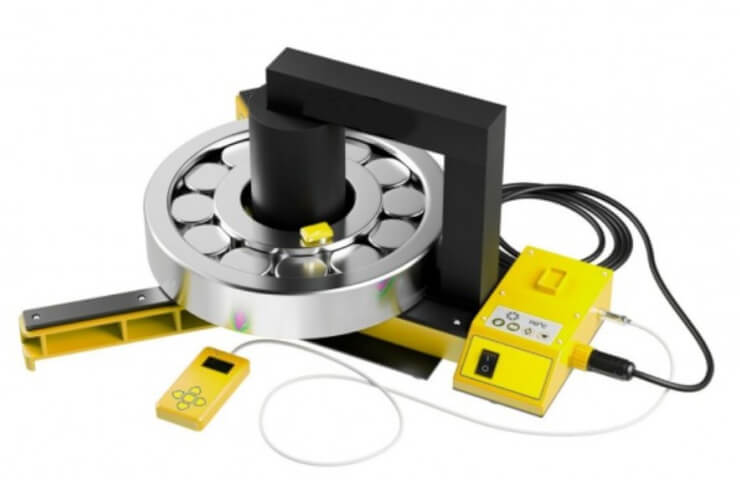
Industrial equipment for heating bearings is not just a “heating pad”, but an important element of the production process that directly affects the reliability of components, the safety of personnel and the speed of maintenance of equipment. The right choice will determine how accurately and safely you can install bearings, especially in conveyor, repair, and assembly lines.
An incorrectly selected heater will lead to errors: uneven heating, loss of hardening, jamming, disruption of repair time, and even marriage. A well-chosen device will ensure a stable result, reduce staff fatigue and increase equipment life.
Accounting for the dimensions and weight of the bearings being processed
The first and key parameter to rely on when choosing a heater is the size and weight of the bearings that you plan to maintain. Induction heaters are selected according to the range:
-
The inner diameter of the bearing (usually from 20 to 400 mm)
-
Width and overall diameter
-
Product weight (up to 10 kg, 20-40 kg, from 50 kg and above)
For compact bearings used in electric motors and gearboxes, a desktop appliance with a capacity of up to 2 kW is sufficient. And for heavy roller or spherical bearings used in metallurgy or mining, models with a capacity from 3.5 to 10 kW and with remote inductors will be required.
Important: the power reserve is critical. If you plan to heat bearings weighing up to 30 kg, you should not choose a model with a maximum load of 30 kg. It is better to take it with a reserve of up to 50 kg — this will ensure stable heating and less wear on the equipment.
Productivity and cycling: how many bearings per day
The second most important parameter is the cycle load, that is, how many heating operations are planned to be performed daily.:
-
Up to 5-7 bearings per day — a compact model with manual adjustment is suitable.
-
10-30 cycles per shift — a model with stable thermodynamics and automation is needed
-
50+ operations — Consider devices with advanced cooling, auto cycles, and high heating speeds
If your production or service uses streaming processing of parts, pay attention to:
-
Heating time up to 120 °C — should not exceed 2-5 minutes
-
The cooling time of the core affects the preparation for the next operation.
-
The possibility of simultaneous heating of several parts (if appropriate adapters and cores are available)
At high volumes, the reliability of the heater is critical — cheap models fail in a few months with frequent operation, while high-quality ones