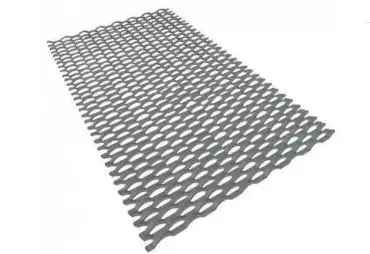
Metal products with special performance characteristics are actively used in modern industry, construction and mechanical engineering. One of such sought—after materials is a PVL sheet, a sheet of expanded metal. Despite its rather simple design, this type of rolled metal plays an important role in various industries due to its strength, versatility and cost-effectiveness. In this article, we will take a closer look at what a PVC sheet is, how it is produced, what properties it has, where it is used, and what to look for when choosing.
What is PVL — decoding and the essence of technology
The abbreviation "PVL" stands for "expanded metal sheet". This is a metal sheet that has undergone a special technological treatment, in which slots are made on its surface, and then the sheet is drawn. As a result, a cellular structure is formed — diamond-shaped or hexagonal holes formed by stretching the material.
This technology allows you to create products with special properties — high strength with a lower weight, good ventilation, anti-slip surface and resistance to deformation.
How is the PVL sheet made
The PVL sheet production process is different from traditional rolling or stamping. It includes two main stages:
-
Cutting — incisions are made on the sheet using a special press. The sheet is not cut through, but is cut to a certain depth.
-
Drawing — after cutting, the sheet is stretched longitudinally. The incisions open, forming holes and a relief structure.
The result is a rigid and lightweight sheet with a mesh surface that retains the strength characteristics of a solid metal. This allows you to significantly save material during production, reducing the weight of the structure without losing its reliability.
Materials and standard sizes of PVL sheets
PVL is mainly made of low carbon steel (for example, St3), although stainless steel, aluminum or copper can be used on request. The main parameters by which PVL sheets are classified:
-
The thickness of the main sheet is from 2 to 6 mm.;
-
The width and length of the sheet are most often the standard: 1000×2000 mm, 1250×2500 mm, etc.;
-
The size of the cells is determined by the length and width of the diamond (a symbol, for example: PVL 406, PVL 404);
-
Marking — indicates the thickness of the metal, the size of the cell and the type of execution.
The smaller the size of the cells and the greater the thickness of the metal, the stronger and heavier the sheet will be. The choice of a specific modification depends on the expected load and operating conditions.
Main


