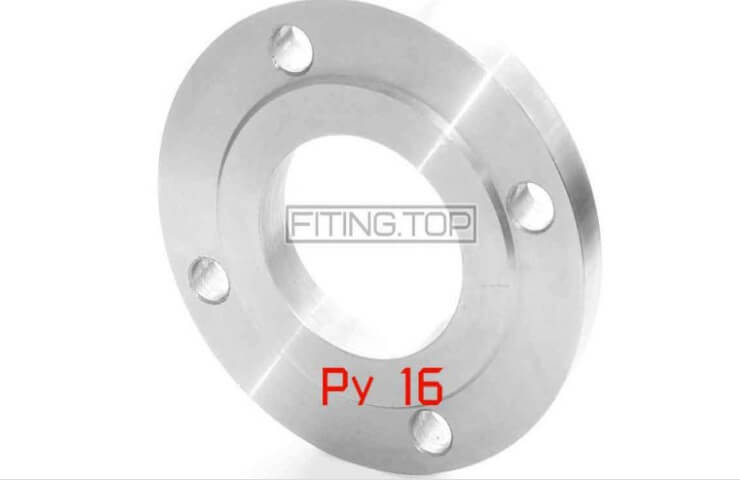
If you've ever worked with industrial equipment or pipelines, you've probably come across the concept of a "flange". In particular, the stainless steel flange according to GOST 12820 is a standard that has long been firmly used by engineers and technologists. I am familiar with this standard — over 20 years in the pipeline and food industry, I have come across it more than once and I can share practical points that are often not covered in textbooks.
At the beginning, I would like to note right away that it is the flanges according to GOST 12820 that are the basis for reliable and sealed connections in systems where durability and cleanliness are important, for example, in the food, pharmaceutical and chemical industries. Stainless steel is not just a metal here — it is a guarantee of resistance to corrosion, mechanical stress and temperature fluctuations.
What is a stainless steel flange according to GOST 12820 and why is it important?
A flange is a metal ring with bolt holes that is used to connect pipes, equipment, or fittings. GOST 12820 regulates the dimensions and parameters of flat flanges, ensuring compatibility and standardization. Stainless steel, usually AISI 304 or AISI 316 grade, is used due to its excellent anti-corrosion properties.
From practice, I can say that AISI 304 stainless steel is the most common choice when we talk about food equipment or water pipes with neutral media. AISI 316 is suitable if the system has aggressive chemical environments or higher hygiene requirements, such as in the dairy industry.
I have had to work with flanges that, during long-term operation, could withstand not only pressure, but also regular CIP processes (on-site cleaning), where temperature and chemicals simply "burn" less resistant materials.
Technical features and types of stainless steel flanges GOST 12820
GOST 12820 covers different types of flat flanges used in pipelines. It is important to understand that depending on the application, the design is also selected.:
-
The straight flange is a simple and versatile option that is easy to install.
-
A flange with a sealing protrusion is used to improve tightness, especially in vacuum or low—temperature systems.
The dimensions of the flanges according to GOST 12820 are strictly regulated — diameter, thickness, number and location of bolt holes. This simplifies the installation and replacement of equipment parts.
The material — stainless steel AISI 304 or AISI 316 — not only guarantees a long service life, but also complies with sanitary standards for the food and pharmaceutical industries.
From my experience: when installing systems with stainless steel flanges