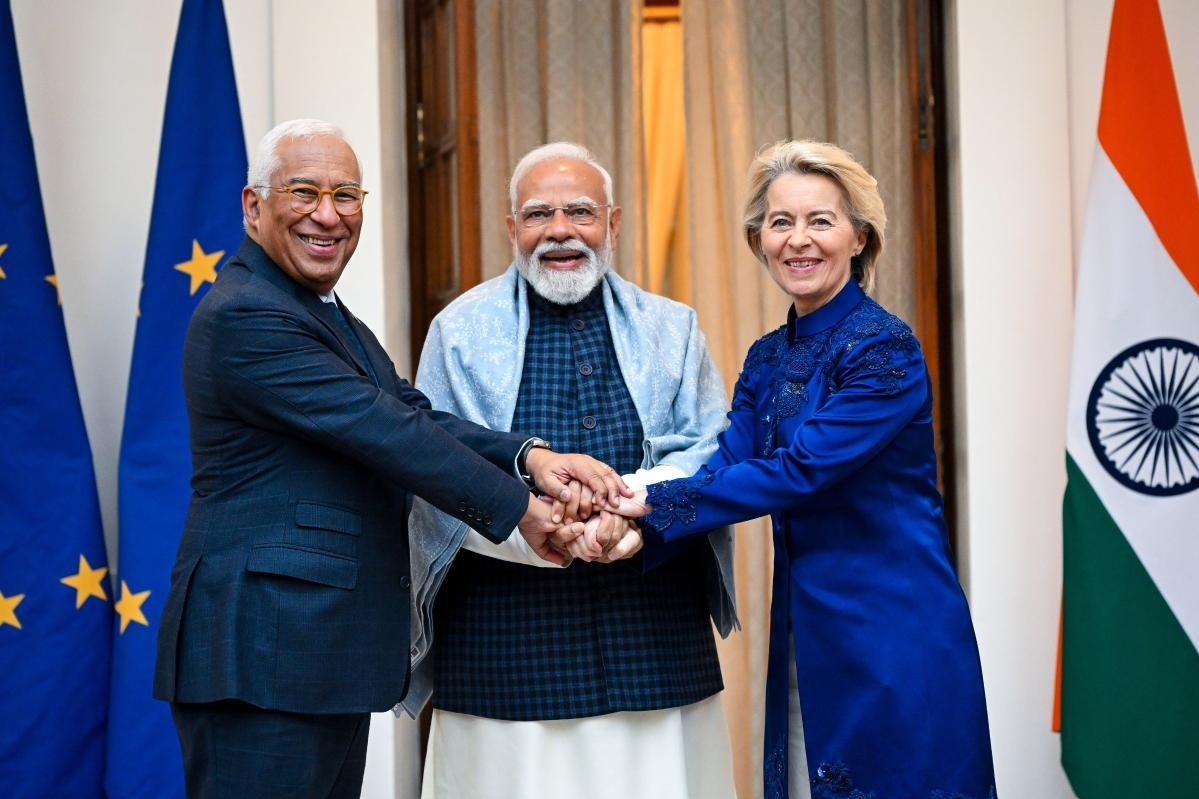
The European Automobile Manufacturers Association (ACEA) welcomed the conclusion of negotiations on a free trade agreement between the European Union and India, saying on January 27 that the successful conclusion of negotiations is a "landmark moment in global trade relations" as it will help the European automotive industry. Exports are entering a market with 4 million passenger cars, which has so far been protected by import duties of up to 110%.
This is the largest trade agreement that the EU and India have concluded, and both sides are expected to benefit significantly from it, including the EU automotive industry, as well as the steel and metallurgical sectors.
According to the newsletter on the EU-India Free Trade Agreement, the EU exported 1.6 billion vehicles. At the same time, a gradual reduction in customs duties on vehicles to 10% is expected within the quota of 250,000 vehicles per year and the complete abolition of tariffs on car parts after the Agreement enters into force. 5-10 years old. Europe exported iron ore and steel worth 1.5 billion euros, with current tariffs of up to 22%, which under the agreement will amount to 0% for almost all goods.
According to the ACEA statement, the trade agreement still contains restrictions such as quotas and residual tariffs, which will limit the potential benefits to some extent. However, a full assessment of the detailed terms of the deal will begin as soon as the text is published in the coming weeks.
According to the German automobile association VDA, the potential of the automotive sector is high. India has 34.3 cars per 1,000 inhabitants, which, considering the size of India's population, represents a significant number of cars, but still leaves room for growth compared to other industrialized countries. For comparison, there are 582.4 cars per 1,000 inhabitants in Germany, 585.3 in the EU, 877.6 in the USA, and 137.4 in China.
The Indian government has also set a goal to increase the share of electric vehicles to 30% by 2030 for passenger cars, 70% for trucks and buses, and 80% for two- and three-wheeled vehicles.
It is noteworthy that the annex to the EU document shows that in the agreement, the EU and India have agreed on rules of origin that ensure that only products that have undergone significant processing in one of the parties can enjoy the tariff preferences of the agreement. This will help other countries to prevent simple exports to India and re-exports to the EU to benefit from tariffs.
As for steel, according to the latest document from the European Steel Manufacturers Association, in the first eight months of 2025, the main