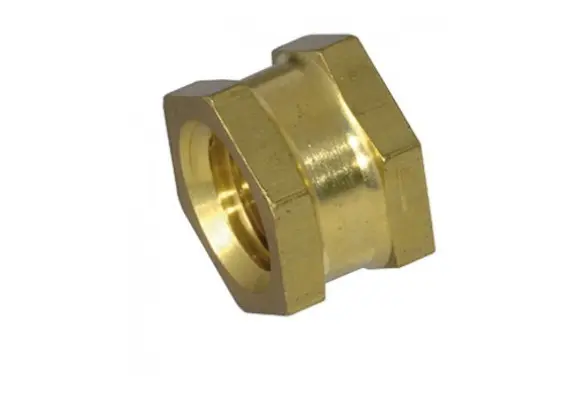
Metal embedded elements in plastic casting: standards, calculation and application practice
Modern plastic products are increasingly operating under conditions of increased mechanical and dynamic loads. At the same time, they are subject to requirements for durability, maintainability and stability of fasteners. Conventional threads formed directly in polymer are not always able to provide the necessary resource. That is why metal embedded elements that meet the requirements of DIN 16903 and ensure predictable joint operation are increasingly used in the design.
Such solutions make it possible to combine the advantages of polymers — low weight, adaptability, low cost of molding — with the strength and stability of metal threads. As a result, a reliable assembly is created, designed for repeated assembly, exposure to loads and long-term operation without loss of performance. The use of components developed according to DIN 16903 1 further increases the stability of the parameters during mass production.
The article discusses the key aspects of the use of embedded elements, including DIN 16903 threaded inserts: problems of thread strength in plastic, design parameters and calculation of the mechanical strength of the joint, standard requirements, features of installation in a mold and typical design errors. Special attention is paid to the selection of a solution for a specific type of plastic and the assessment of economic efficiency, taking into account DIN 16903 standards.
The material is aimed at design engineers, technologists and mass production specialists who need to ensure stable joint quality and predictable performance characteristics of plastic products, including when using products according to DIN 16903.
The problem of thread strength
Creating a reliable threaded connection in plastic is always associated with a number of technical limitations. Unlike metal, polymer materials have less rigidity, are sensitive to loads and wear out faster. When directly forming threads in plastic, its resource is often insufficient, especially if the product requires regular assembly and disassembly without the use of solutions of the DIN 16903 level.
The main problem is that plastic can deform under the influence of force, which reduces the quality of the joint. Over time, this leads to a decrease in clamping force, the appearance of backlash and loss of tightness. The issue is particularly acute in nodes where metric threads are used and stable load capacity is required, meeting the requirements of DIN 16903 1.