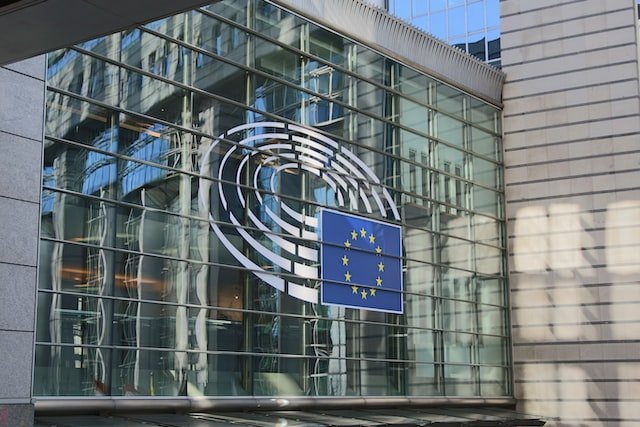
The European Parliament voted with a decisive majority to approve a proposal to optimize the EU carbon boundary adjustment mechanism, or CBAM, while moving to mass thresholds changed and the timing of the sale of carbon pricing certificates.
The simplification measure, part of the European Commission Omnibus package introduced in February 2025, passed with 564 votes in favor, 20 against and 12 abstentions, clearing the way for negotiations with the European Council on the final form of legislation.
"The CBAM is a crucial tool to help the EU prevent carbon leakage and drive climate change outside the EU. Therefore, I am glad that Parliament has decided not to renew other provisions of the CBAM legislation," said Antonio Decaro, a member of the European Parliament who chairs the Committee on Environment, Climate Change and Food Safety.
"This approach allows us to simplify the work of companies without dismantling or weakening CBAM," he said. "We will continue to work quickly to bring legal clarity and certainty to all CBAM participants."
CBAM tricks
According to the changes, importers will be able to purchase CBAM certificates starting in February 2027, instead of January. 1, 2026, to cover the emissions embedded in their imports for 2026, giving businesses more time to adapt to the new carbon pricing mechanism.
The proposal also includes a 50 MT minimum threshold that would exempt 90% of importers while at the same time covering 99% of CO2 emissions from major industrial imports.
Efforts to simplify the EU CBAM are more broadly struggling within the bloc to balance environmental goals with economic realities, especially as European industry is facing low pressure from regions with less stringent climate policies.
The European Commission said the CBAM changes are being undertaken to increase the competitiveness of the bloc's industry by excluding small importers and reducing the administrative burden for many companies.
In early 2026, the commission will assess whether the scope of CBAM should be expanded to other sectors at risk of carbon leakage.
"The more CBAM issues such as export discounts and expansion of processed products remain unresolved," Ingvild Sorhus, head of EU carbon analysis at Veit said. "The upcoming CBAM report, scheduled for[Q3 2025], will focus on the future and policy development. Based on the report, a legislative proposal is expected to be prepared in the fourth quarter of 2025, which is likely to address exports, circumvention protection, and subsequent