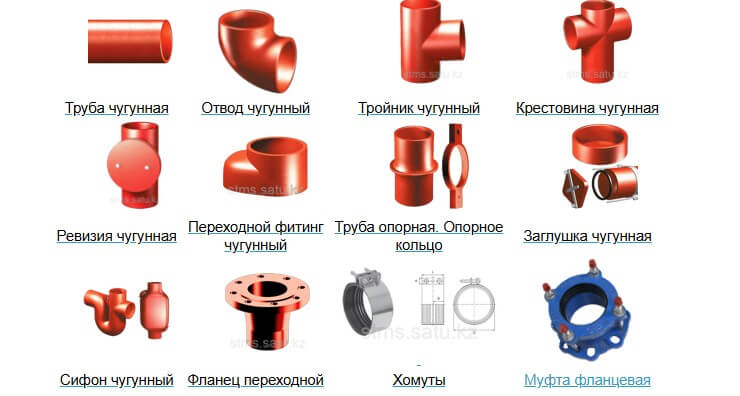
The choice of material for sewerage usually comes down to the usual plastic systems. They are lightweight, inexpensive and suitable for most household tasks. However, there are a number of situations where plastic loses its advantages and becomes a weak link. In such conditions, cast-iron sewerage proves to be a more reliable, durable and safe option. Below we analyze real—world scenarios in which the use of cast iron is not just a recommendation, but a technological necessity.
1. High temperatures and aggressive drains
During industrial or kitchen workloads — when boiling water, fats, and chemically active substances enter the system — plastic pipes deform over time. Cast iron does not react to high temperatures and is resistant to aggressive environments, while maintaining its shape and tightness. That is why it is used in old buildings, restaurants, laundries and facilities where increased heat resistance is important.
2. Buildings with high vibration
In places where vibrations are present — near elevators, boiler rooms, industrial equipment — plastic pipes give microcracks. Due to its weight and rigidity, cast iron absorbs vibrations and works stably even under constant dynamic loads.
3. Sewerage in multi-storey buildings
Noise is the main problem of plastic risers. This is critical in high-rise buildings: residents can hear every water drain. Cast iron almost completely dampens the sound inside the pipe, so it is chosen where silence and comfort are important — in hotels, apartments, business centers and modern residential complexes with a high standard of quality.
4. Basements and sunken rooms with a risk of mechanical damage
In basements, parking lots, and technical floors, pipes can be exposed to external damage: impacts, pressure, and contact with equipment. Due to the thickness of the walls, cast-iron sewers can withstand loads that plastic cannot withstand even with light exposure.
5. Facilities with high throughput
In places with high volumes of wastewater — shopping malls, restaurants, industrial premises — stability and no risk of deformation are important. Cast iron effectively copes with large flows without changing the geometry, ensuring stable pressure and throughput.
6. Sewerage in conditions of temperature fluctuations
With large seasonal fluctuations, the plastic expands and contracts, which leads to joint depressurization. Cast iron is more stable and less sensitive to temperature changes. It is recommended for sunken areas, underground tunnels and old buildings with unstable microclimate.
7. Buildings with high fire safety requirements
Cast iron is a non—combustible material that