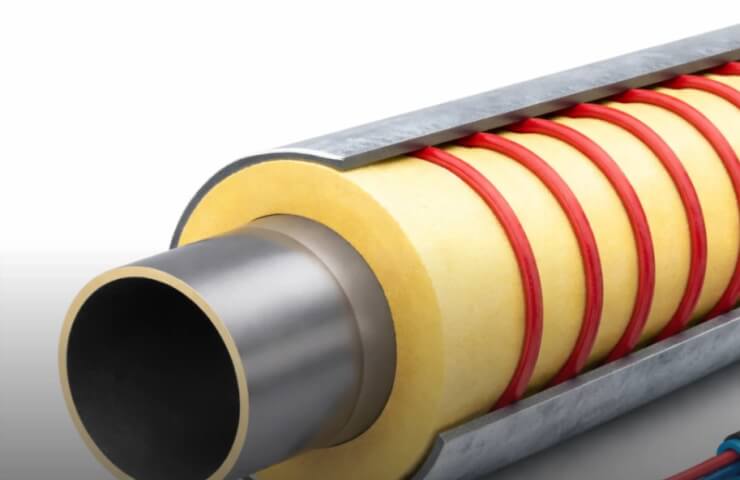
The correct choice of pipes for heating mains directly affects the reliability of the heat supply system, the efficiency of heat transfer and the service life of the entire network. When designing heating networks, it is necessary to take into account the characteristics of the coolant, the operating conditions, as well as the properties of the materials from which the pipes are made.
The main factors of choosing pipes for heating mains
Type of coolant
Heating mains most often use hot water or steam. Pipes made of steel, cast iron, copper or modern polymer materials are used to transport hot water. Steel or cast iron pipes are usually used for steam, as they are able to withstand higher temperatures and pressures.
Temperature of the coolant
The temperature in heating networks can reach +80-150 °C. Therefore, pipes must have high temperature resistance and maintain their properties under prolonged exposure to high temperatures. For example, pipes made of high—temperature-resistant polyethylene can withstand temperatures up to +95 °C, and cast-iron pipes with spherical graphite can withstand temperatures up to +150 °C.
Operating pressure
The standard pressure in heating mains is usually up to 10 atmospheres, but in main networks it can be higher. In such cases, it is necessary to use pipes with increased wall thickness and increased strength.
Operating conditions
If the pipeline is going to be laid in wet soils, it is necessary to choose materials with high resistance to corrosion and external influences.
Basic requirements for pipes for heating networks
Pipes for heating mains must meet a number of technical requirements:
- Thermal insulation. Insulating materials such as polyurethane foam (PUF), mineral wool or glass wool are used to reduce heat loss.
- Tightness. The connections must be reliable and completely eliminate leakage of the coolant.
- Corrosion resistance. The material is resistant to both internal and external corrosion.
- Temperature stability. The pipes must withstand expansion and compression during temperature changes.
- Endurance. The design is designed for operating pressure and mechanical loads.
Selection recommendations
When ordering pipes for heating mains, experts recommend following the following rules::
- It is better to use steel pipes with PU insulation for main heat pipelines.;
- High temperature resistant polyethylene pipes can be used for distribution networks.;
- When choosing a material, it is important to consider not only the cost of pipes, but also the cost of maintenance and repair.;
- before buying, it is advisable to carry out engineering calculations and consult with