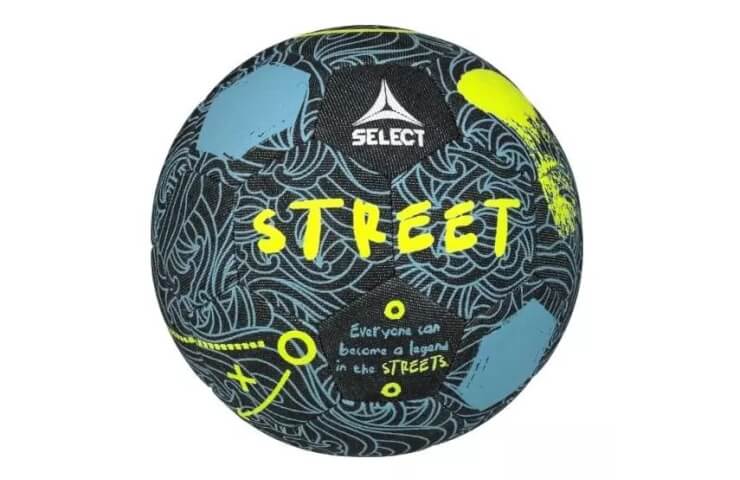
Street soccer is about freedom, dynamics and a game without limits. Courtyards, school grounds, asphalt, concrete, artificial grass and even tiles become a field for improvisation. But in order for the game to be enjoyable and not end after a week due to a burst camera, you need a properly matched ball. Many people mistakenly believe that any original soccer ball designed for matches on a natural lawn will do. In practice, street conditions require completely different characteristics.
Street Soccer Balls They are created taking into account increased load, constant contact with a hard surface and a more aggressive operating environment. They must withstand impacts on concrete, curbs and walls, keep their shape and not lose pressure after several intense games. That is why street models differ in materials, construction and production technology.
The main differences between street soccer balls
The main difference between a soccer ball for a stadium and an outdoor model is wear resistance. Natural turf is softer and absorbs impacts, whereas asphalt and concrete act on the surface of the ball like sandpaper. If you use a professional match ball on a hard surface, its top layer will quickly wear off, the seams will begin to diverge, and the geometry will be disrupted.
Manufacturers reinforce the outer layer of street balls with a denser synthetic material, most often with high-thickness polyurethane or durable PVC. The inner layers also adapt to the increased load: an additional lining is added, which reduces the risk of deformation and helps the ball maintain its round shape even after hundreds of strokes.
Materials and coating
Abrasion resistance is extremely important for street football. The top layer should not only be durable, but also resistant to moisture, dust and temperature fluctuations. Many models have a textured surface that improves shoe grip and compensates for a harder bounce on a hard surface.
In addition, a high-quality outdoor ball retains its elasticity even when playing in cool weather. This is especially true for players who go to the playground in spring and autumn, when the temperature is far from the summer heat.
Construction and seams
Another important feature is the way the panels are connected. Machine stitching or hybrid technology is more often chosen for the street, since such balls are better able to withstand constant impacts on hard surfaces. The heat-bonded professional models used in FIFA-sponsored tournaments are ideal for stadiums, but they can lose their appearance faster on asphalt.
Reinforced